
I found the cover of the May–June edition of Harvard Business Review brilliant—I literally fell in love with it.
I'd title it "Renewed classicism in top management."
Without meaning to read too much into the image, in the most basic sense of what it conveys: femininity and delicacy. One thing is clear—"agility" today is a value on the rise for any executive worth their salt.
What does it mean to be agile, according to the RAE?
From Lat. agĭlis.
1. adj. That which moves with ease and speed.
2. adj. Said of a movement: Skillful and quick. She walks with an agile step.
3. adj. That which acts or develops with speed or promptness.
How many companies do you know that were leaders in their sector and no longer are? Or even worse, that have disappeared—mainly for lack of vision and agility?
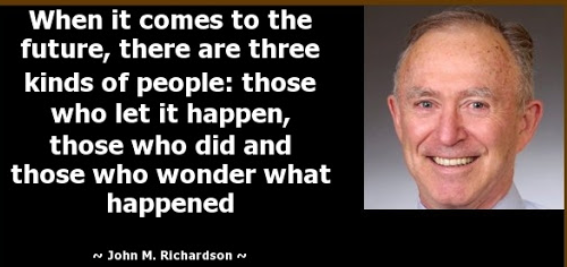
Companies are led and built by people.
Having a good product or service is not synonymous with success. Very often, a "bad" product with good marketing/strategy sells better than a better one with bad marketing (a leader who isn't very agile).
Why? It has been shown that 5% is the idea (product/service) and 95% is the execution. So the very thing Professor Richardson tells us about people, we apply to companies.
It's clear that agility on its own is not the only skill that will lead our company to success, but it will be key to pulling it out of a tight spot.
Vision, perseverance, resilience, teamwork and agility—but this last one is, today, an indisputable key to success.
Maria Cudeiro. W&B
Paralysis by analysis.
There are executives and corporate cultures so afraid of failure that they fall into "paralysis by analysis." It's obvious you'll never have all the information, nor a crystal ball... you have to take (controlled) risks, be quick in making decisions and in carrying them out afterward.
What is the formula for success?
The professor and head of the people department at ESADE; Marc Correa puts it very well:
"Success is defined by the ability to take risks at exactly the best moment; we have to get ahead."
Marc Correa, ESADE Business School.
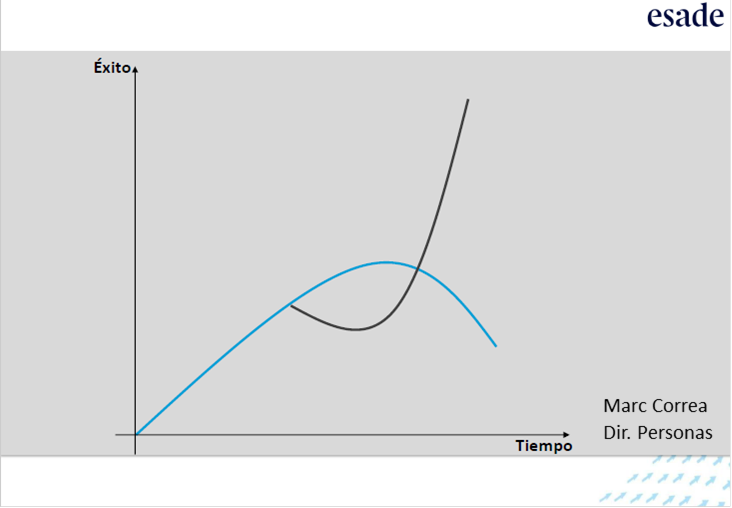
In the V.U.C.A. environment it isn't the biggest or the most powerful who wins—it's the fastest....
Private equity firms are clear about it... they invest in agility and innovation.

More and more start-ups manage to "scratch away" market share from the great historic leaders of their sector. Why? They're faster, humbler, they think out of the box, they're not afraid and they work as a team.
A few days ago I asked the CEO of a large company (>300 million in revenue) why he thought they had lost market share in some segments where they were the undisputed leaders. His answer was clear: "arrogance and lack of agility."
The solution: you have to take risks.
Speed in decision-making has to be worked on at the corporate level. We may have a CEO whose nature isn't to make decisions quickly, or the culture may not allow it. Many executives describe their own organizations as "ocean liners," in which changing course becomes a real odyssey.
Humility, passion, perseverance, agility and resilience are keys to achieving success.
The leader's humility: we have to accept that the key answers in the organization may be in the head of the employee you'd least expect, or they may come out of group work or even—why not?—an internal contest.
Internal communication is another key element.
Take the example of the call center; the people who have the most contact with the consumer have a civil-servant's salary and schedule. It's precisely with their information that we can quickly identify gaps in our processes and/or services.
The V.U.C.A. environment is here to stay.
The Netflix case.
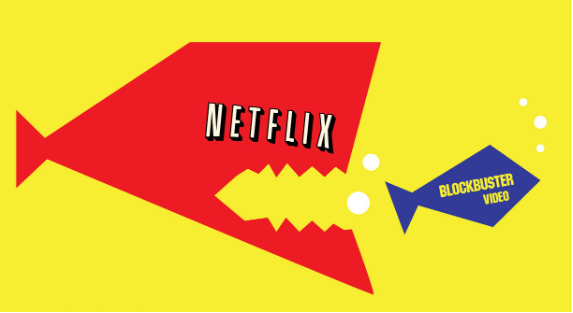
Who would have said that a small start-up would make the giant Blockbuster disappear?
It's one of the most interesting cases of a lack of agility and vision. It all began with a fine Blockbuster charged to one of Netflix's founders—he couldn't be bothered to return a movie and got hit with a $40 fine, which annoyed him quite a bit and got him thinking about a system that would make the user's life easier.
We study the Netflix case in every business school; it's full of learnings, both at the business level and at the level of leadership and personal resilience. I'll leave you a link where you can listen to the Netflix case.
At one point BB could have bought Netflix for $50 million, but they literally laughed in their faces... Today Netflix is valued at $150 billion.
The message: be humble as a person and as a leader.
The transformational leader, the most sought-after by companies.
The concept of the transformational leader was introduced by Professor James Mc Gregor Burns (1978)
The transformational leader sets themselves up as a role model, creates an environment of trust with their team, and together, as a unit, they all pursue the same goal.
Characteristics of the transformational leader:
- They share the vision and lead the way in an innovative manner.
- They set joint goals with their team.
- They make coaching and mentoring central to their organization.
- They encourage their team members to take controlled risks.
- They create an environment of complete trust.
The most common leader today is the transactional one: "you give to me, I give to you." It's the most classic leadership style; everyone's roles are clearly defined and people are rewarded for clear, individual goals. It works, but it's short-term-minded and fails to build an agile team.
Although the transformational and transactional leader are different, we can adopt characteristics of both in certain situations.
My experience:
Throughout my professional career, whenever I chose to lead a small project I'd think to myself, "who on earth told me to get into this mess...". I always thought there was nothing harder than placing a brand on the map in a sector you don't know from Adam. Well, everything is hard, folks: launching a new brand on the market, and holding on to your market share when you're the leader.
In conclusion, if you want to succeed in launching a new project, recovering lost market share, or adapting to the new reality, the formula is simple:
Prove you're a transformational leader: be agile, humble, resilient. Take controlled risks and bring out the best in every member of your team.
The team will be a reflection of its leader.
Woman&business
We hope you liked it. :)
Leave us your comments.
The Woman&Business Team.
Cargando comentarios...